

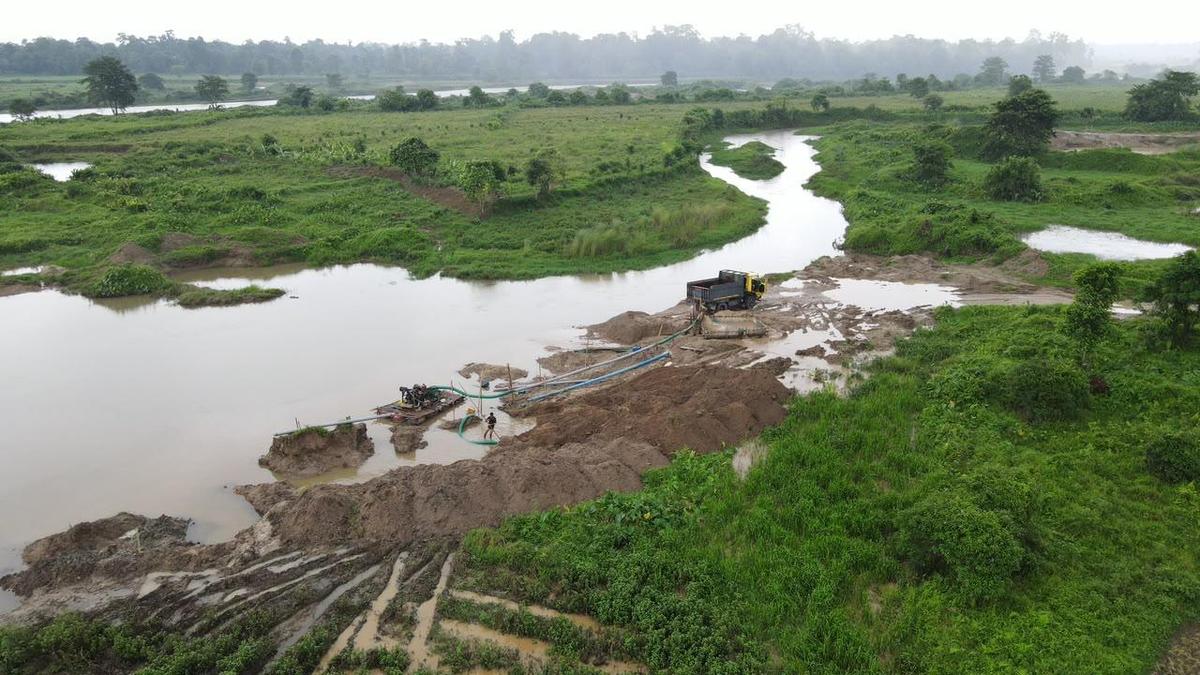
The mining industry is changing faster than ever. Safety, critical minerals, technology, energy security, investment and policy are now closely connected. Therefore, individual mining news stories can reveal much larger industry trends. The following ten developments offer important clues about where the future of mining could be heading.
1. Landslide Kills 13 at Illegal Gold Mine in Colombia
A landslide at an illegal gold mine in Colombia killed 13 people and injured seven others. This tragedy again shows the human cost of poorly controlled mining. Illegal operations often lack proper geotechnical studies, slope monitoring and emergency planning. Consequently, governments may face stronger pressure to control unregulated mining. Mining companies could also face higher expectations for demonstrating responsible ground control. Moreover, technologies such as radar, drones and remote monitoring can help identify unstable ground earlier. The lesson is simple: production cannot come before safety. In the future, regulators may increasingly connect mining permissions with measurable safety standards. For mining professionals, this reinforces the importance of geotechnical engineering and risk-based monitoring. Ultimately, the future of mining will depend not only on extracting minerals, but also on protecting the people who extract them.
2. Coal India Moves Towards Global Critical Mineral Trading
Coal India is planning its first overseas trading office in Singapore. The office could support iron ore and critical mineral investments abroad. This is significant because Coal India is historically associated with coal production. However, the company is now looking beyond its traditional commodity. It is reportedly examining lithium, bauxite and rare earth opportunities across several countries. Therefore, this move reflects a wider change in India’s resource strategy. Mining companies may increasingly become diversified mineral businesses rather than single-commodity producers. In addition, overseas mineral assets could help India reduce dependence on imported strategic resources. This could create new opportunities for exploration, international joint ventures and mineral trading. For professionals, knowledge of critical minerals could become increasingly valuable. Clearly, the future of mining will involve portfolios covering both traditional and emerging minerals.
3. Tata Steel Plans a Major Eastern India Expansion
Tata Steel has announced a ₹338.7 billion investment for expansion in eastern India. The investment is expected to strengthen India’s domestic steelmaking capacity. This decision is important because steel demand remains closely linked with infrastructure and industrial development. Meanwhile, India’s growing manufacturing ambitions require reliable domestic steel supply. Large expansions also create additional demand for iron ore, coal, limestone and other raw materials. As a result, mining companies may see stronger long-term demand for high-quality domestic resources. However, future projects will also face pressure to improve energy efficiency and reduce emissions. Therefore, mining and steel industries will increasingly need to plan together. The development also highlights the importance of integrated supply chains. Ultimately, India’s industrial growth could strengthen the domestic mining sector. This makes steel expansion an important indicator of the future of mining in India.
4. Women Take Full Control of Vedanta’s Lanjigarh Control Rooms
Vedanta Aluminium’s Lanjigarh refinery has reported that women now represent the entire Control Room Operator workforce. This is more than a workforce diversity story. It demonstrates how industrial roles are changing with technology and skills. Modern control rooms depend heavily on digital systems, real-time data and process automation. Therefore, physical strength is becoming less important for many operational positions. Instead, analytical thinking, communication and decision-making are becoming critical skills. Moreover, greater participation by women can expand the industry’s available talent pool. Mining companies may consequently invest more in technical training for women from mining communities. This could improve both employment and community relationships. The change also challenges traditional assumptions about who can operate complex industrial systems. In the future, diversity could become an operational advantage rather than simply a corporate policy. That makes workforce transformation an important part of the future of mining.
5. MMDR Amendment Raises Questions About State Mining Revenue
The Mines and Minerals Amendment Act, 2026 has changed the framework for state levies on mineral rights. The amendment restricts state governments from imposing specified taxes, cesses and levies. Mineral-rich states, including Odisha, have raised concerns about their financial autonomy. However, the Centre argues that the reform will create greater fiscal certainty for mining investors. Therefore, the long-term impact could depend heavily on how the new framework is implemented. More predictable taxation may encourage investment in large mining projects. At the same time, states may worry about losing potential revenue from their mineral resources. This creates an important balance between national mineral policy and state interests. Consequently, mining companies should closely monitor future rules and legal developments. The debate could influence project economics, investment decisions and mine planning across India.
6. NASA’s Nuclear Reactor Could Open a New Frontier for Space Mining
NASA is planning the Space Reactor-1 Freedom mission, targeting a December 2028 launch. The concept aims to demonstrate nuclear power and propulsion in deep space. At first glance, this may seem unrelated to mining. However, the connection becomes clearer when we consider future space-resource development. Nuclear power could provide reliable energy where sunlight is weak or intermittent. Therefore, future lunar or Martian mining operations could eventually use nuclear systems. Such technology could support autonomous equipment, processing plants and long-duration missions. Moreover, space mining will require extremely reliable energy systems. Solar power alone may not satisfy every future requirement. This development therefore represents a technology pathway rather than an immediate mining opportunity. Nevertheless, it shows how mining may eventually move beyond Earth. For those interested in long-term resources, the future of mining could ultimately include extraterrestrial environments.
NASA’s Space Reactor-1 information
7. India’s Nuclear Expansion Could Create a Major Uranium Challenge
A Parliamentary panel has highlighted a potential uranium requirement of about 5,400 tonnes annually. Domestic production currently meets only around 30% of that projected requirement. This creates an important challenge for India’s nuclear expansion plans. More nuclear power means more demand for secure uranium supplies. Therefore, domestic uranium exploration and mining could become strategically important. The government may need to accelerate projects while also developing overseas supply agreements. Moreover, long-term uranium stockpiles could become part of national energy security planning. This could create opportunities for exploration contractors, mining technology companies and specialised operators. However, uranium mining also requires strict regulatory and environmental controls. Consequently, resource availability alone will not guarantee rapid production growth. The development shows that energy security and mineral security are becoming inseparable. This is another major theme shaping the future of mining.
8. Colombia Resumes Coal Exports to Israel
Colombia has reportedly reversed its earlier restriction and resumed coal exports to Israel. The development demonstrates how political decisions can quickly influence international commodity flows. Coal remains an important traded commodity despite the global energy transition. However, trade relationships can change when governments change. Therefore, mining companies operating internationally must consider geopolitical risks alongside geological and financial risks. A change in export policy can affect customers, prices and shipping routes. Similarly, sanctions or diplomatic restrictions can disrupt established supply chains. Consequently, miners may increasingly diversify their customer base and export markets. Commodity traders will also need to monitor political developments more closely. This is especially relevant for coal, which faces both energy and geopolitical pressures. In the future, successful mining companies may need stronger capabilities in market intelligence and geopolitical risk management.
9. Odisha Congress Seeks Assembly Session Over the Mines Bill
The Odisha Congress has submitted a memorandum seeking a special Assembly session to discuss the MMDR Amendment. The move highlights the growing political sensitivity surrounding mineral resources. Odisha depends heavily on mining revenue and mineral-based industries. Therefore, changes to mining taxation can have consequences beyond individual mining companies. They can influence state finances, infrastructure spending and local development programmes. At the same time, political disagreements can create uncertainty for investors. However, debate can also improve transparency around how mineral wealth is distributed. Mining companies should therefore watch both legislation and implementation. Furthermore, mineral-rich states may increasingly demand stronger participation in national mineral policy. This debate could become particularly important as India expands critical mineral exploration. Ultimately, mining policy will need to balance national resource security with regional economic interests.
10. Chhattisgarh Clears 45 Mineral Exploration Projects
Chhattisgarh has approved 45 mineral exploration projects for 2026–27. Importantly, 35 projects focus on critical and strategic minerals. The programme includes lithium, graphite, rare earth elements and tin-tantalum-niobium opportunities. This represents a significant shift from traditional bulk-mineral exploration. Moreover, the state is encouraging exploration of deeper deposits using advanced technologies. Consequently, exploration geologists and mining technology providers could see growing demand. New discoveries could also attract processing, refining and downstream manufacturing investments. However, exploration success will depend on geological confidence, infrastructure and commercial viability. Therefore, exploration should be viewed as the beginning of the mining value chain. If successful, Chhattisgarh could become more important in India’s critical mineral strategy. This development clearly shows how exploration priorities are changing across India. For professionals, critical mineral knowledge will increasingly define the future of mining.
What These Ten Stories Tell Us About Mining
Taken together, these developments show that mining is no longer only about extracting ore. Safety, technology, geopolitics, energy security, workforce transformation and government policy are becoming equally important. Moreover, traditional commodities such as coal and steel are continuing alongside newer opportunities in lithium, uranium and rare earth elements.
The industry is therefore moving towards a more diversified and technology-driven model. Mining companies will need stronger technical capabilities and better risk management. At the same time, governments will need policies that encourage investment while protecting public interests.
For mining professionals, this transition creates both challenges and opportunities. Skills in geotechnical engineering, automation, critical minerals, data analytics and sustainability could become increasingly valuable.
You can explore more mining, geotechnical and industry insights on Minestronix.
The key message is simple: the future of mining will belong to companies and professionals who can adapt before the industry forces them to change.

Have any thoughts?
Share your reaction or leave a quick response — we’d love to hear what you think!
-
 0
0
-
 0
0
-
 0
0
-
 0
0
-
 0
0
-
 0
0